

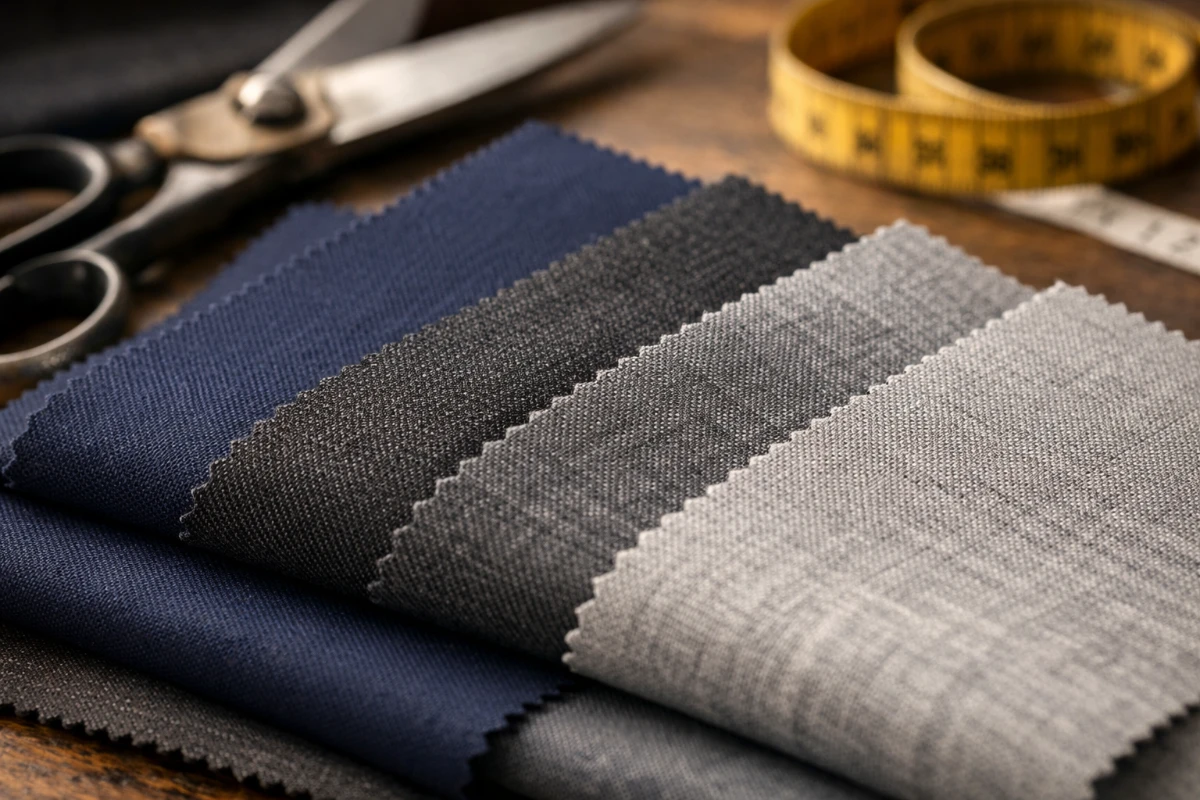
Walking into a tailor shop in Bangkok and hearing terms like “Super 150s,” “twill weave,” or “300 thread count” can feel overwhelming. When investing in tailored suit fabrics, understanding what these numbers actually mean is the difference between getting exceptional value and paying for marketing hype. This guide breaks down the technical terminology so you can make informed decisions about your next bespoke suit.
Understanding Super Numbers in Tailored Suit Fabrics
The “Super” number you see on fabric labels (Super 100s, Super 150s, Super 180s) refers to the fineness of the wool fiber, measured in microns. Higher numbers mean finer, softer fibers. However, this is where many people get confused about tailored suit fabrics.
What Super Numbers Actually Measure
A Super 100s fabric means the wool fibers measure approximately 18.5 microns in diameter. Super 150s measures around 16.5 microns, and Super 180s sits at about 15.5 microns. The finer the fiber, the softer and more luxurious the fabric feels. But here is what most salespeople will not tell you: higher super numbers do not automatically mean better quality in tailored suit fabrics.
The Sweet Spot for Durability
For everyday business suits, Super 110s to Super 130s offers the ideal balance. These tailored suit fabrics are soft enough to feel premium but durable enough to withstand regular wear. Super 150s and above feel incredibly luxurious but are more delicate. They are best reserved for special occasions rather than your Monday-through-Friday rotation.
When Bangkok’s heat and humidity enter the equation, Super 120s becomes particularly practical. The fabric remains breathable while maintaining its structure throughout the day. This guide on suit fabrics for Thailand’s climate provides additional insights into choosing materials suited for tropical conditions.
Thread Count: Not Just for Bed Sheets
Thread count in tailored suit fabrics refers to the number of yarns per square inch, combining both warp (vertical) and weft (horizontal) threads. A typical quality suit fabric ranges from 200 to 400 threads per square inch.
Why Higher Thread Count Is Not Always Better
Unlike bedding, where higher thread counts often indicate luxury, tailored suit fabrics require balance. A fabric with 300 thread count might outperform one with 400 thread count if the yarn quality is superior. The relationship between thread count and fiber thickness matters more than the number alone.
Denser weaves (higher thread counts) create heavier fabrics better suited for cooler climates. In Bangkok’s tropical environment, a moderate thread count between 240 and 320 allows for better air circulation while maintaining the fabric’s integrity. This is why experienced Bangkok tailors often recommend specific fabrics based on your lifestyle rather than just showing you the highest numbers.
Fabric Weight: Measuring in Ounces and Grams
Fabric weight, measured in ounces per yard or grams per meter, significantly impacts how tailored suit fabrics perform in different climates and seasons.
Weight Categories Explained
Lightweight fabrics (7-9 oz or 240-310 gsm) work best for summer and tropical climates. Medium weight fabrics (10-12 oz or 340-410 gsm) offer year-round versatility in temperate climates. Heavyweight fabrics (13-16 oz or 440-540 gsm) provide warmth and structure for winter suits.
For Bangkok residents and visitors, 8 to 10 ounce tailored suit fabrics deliver optimal comfort. The fabric drapes elegantly without clinging to your body in humidity. When ordering a bespoke shirt to match your suit, similar weight considerations apply to ensure comfort throughout the day.
Weave Patterns That Impact Quality
The way tailored suit fabrics are woven affects their appearance, durability, and how they handle wrinkles. Understanding basic weave patterns helps you evaluate fabric quality beyond the numbers.
Plain Weave
The most basic and durable weave pattern, plain weave creates a uniform, matte surface. These tailored suit fabrics resist wrinkles well and maintain their shape through multiple wearings. They are ideal for business suits that see frequent use.
Twill Weave
Recognizable by its diagonal pattern, twill weave produces tailored suit fabrics with natural stretch and drape. The weave creates a subtle sheen that photographs well, making twill popular for special occasions. Twill also resists showing wrinkles, though it may develop shine at pressure points over time.
Herringbone and Houndstooth
These complex weave patterns add visual interest to tailored suit fabrics. Herringbone creates a V-shaped pattern, while houndstooth produces a distinctive checked design. Both offer the durability of plain weave with enhanced style appeal.
Natural vs Synthetic Fiber Blends
Pure wool dominates quality tailored suit fabrics, but strategic blending with other fibers can enhance specific properties without sacrificing quality.
Wool-Polyester Blends
A small percentage of polyester (typically 5-10%) increases wrinkle resistance and durability in tailored suit fabrics. These blends dry faster in humid climates like Bangkok and maintain their shape better with frequent wear. However, pure wool breathes better and develops a more distinguished patina over time.
Wool-Silk Blends
Adding silk to tailored suit fabrics creates a subtle luster and enhances drape. Wool-silk blends feel luxurious and resist wrinkles while maintaining breathability. These fabrics work particularly well for evening wear and special occasions.
Wool-Linen Blends
For tropical climates, wool-linen blends offer the best of both worlds. Linen adds breathability and moisture-wicking properties to tailored suit fabrics, while wool provides structure and wrinkle recovery. A 60/40 or 70/30 wool-linen blend performs exceptionally well in Bangkok’s climate.
Evaluating Fabric Quality by Touch and Sight
Numbers and specifications tell part of the story, but your senses provide crucial information about tailored suit fabrics that charts cannot capture.
The Hand Test
Quality tailored suit fabrics should feel smooth but not slippery. Run your hand across the surface in both directions. Consistent texture indicates even yarn distribution. The fabric should have some body when you drape it over your hand, it should not feel limp or overly stiff.
The Wrinkle Test
Crush a corner of the fabric in your hand and release it. Quality tailored suit fabrics should begin recovering their shape within seconds. Fabrics that hold deep wrinkles indicate lower wool quality or problematic finishing.
The Light Test
Hold the fabric up to natural light. You should see a relatively even distribution of light, indicating consistent weaving. Irregular patches or thin spots suggest quality control issues in the tailored suit fabrics.
What Professional Tailors Look For
When evaluating tailored suit fabrics for clients, experienced tailors consider factors beyond marketing specifications.
Fabric Finishing
Quality tailored suit fabrics receive proper finishing treatments that enhance their natural properties. Look for fabrics that feel slightly crisp to the touch rather than overly soft or fuzzy. Professional finishing creates the foundation for a suit that maintains its appearance through years of wear.
Color Consistency
Examine the fabric closely for consistent color throughout. Quality tailored suit fabrics show no variation in dye saturation. This consistency becomes particularly important in patterns where multiple colors interact.
Selvage Quality
The selvage, or finished edge, of tailored suit fabrics reveals manufacturing quality. A clean, tightly woven selvage indicates attention to detail throughout the production process. Frayed or loose selvages often signal corners cut during manufacturing.
Climate-Specific Considerations for Bangkok
Bangkok’s tropical climate demands specific attention when selecting tailored suit fabrics. Temperature, humidity, and frequent transitions between air-conditioned spaces and outdoor heat create unique challenges.
Breathability Ratings
While not typically shown on labels, breathability determines comfort in Bangkok’s heat. Natural fibers like wool, linen, and cotton allow better air circulation than synthetics. For a tailored dress or suit, choosing breathable fabrics makes all the difference in comfort.
Moisture Management
Quality tailored suit fabrics should wick moisture away from your body. Wool naturally absorbs up to 30% of its weight in moisture before feeling damp. This property makes wool surprisingly comfortable in humid climates when you choose the appropriate weight.
Common Myths About Tailored Suit Fabrics
Myth: Higher Super Numbers Always Mean Better Quality
While Super 180s sounds impressive, these ultra-fine tailored suit fabrics sacrifice durability for softness. A well-constructed Super 120s suit often outlasts and looks better longer than a poorly made Super 180s suit.
Myth: All Italian Fabrics Are Superior
Italy produces many of the world’s finest fabrics, but origin alone does not guarantee quality. English mills like Scabal and Holland & Sherry create exceptional tailored suit fabrics, as do some Asian manufacturers. Evaluate each fabric on its own merits rather than relying solely on country of origin.
Myth: Expensive Always Means Better
Price reflects many factors beyond fabric quality, including brand markup, import costs, and retailer margins. At a reputable Bangkok tailor, you can access exceptional tailored suit fabrics at fair prices because overhead and import taxes remain lower than in Western markets.
Making the Right Choice for Your Needs
Understanding technical specifications helps, but selecting tailored suit fabrics ultimately depends on your lifestyle and wearing occasions.
For Daily Business Wear
Choose Super 110s to Super 130s in medium weights with plain or twill weave. These tailored suit fabrics withstand frequent wearing and cleaning while maintaining a professional appearance. Consider colors like navy, charcoal, and medium grey that hide minor marks better than black.
For Special Occasions
Super 150s or wool-silk blends create the luxury feel appropriate for weddings and formal events. These tailored suit fabrics can be more delicate since they will not see daily wear. Darker colors photograph better for evening events.
For Tropical Business Travel
Look for 8-9 ounce fabrics in Super 120s with breathable weaves. Wool-linen blends offer excellent performance in heat and humidity. Light grey, tan, and lighter blues remain appropriate for business while reflecting heat better than dark colors.
Questions to Ask Your Tailor
When discussing tailored suit fabrics with your tailor, asking informed questions demonstrates your understanding and helps ensure you get appropriate recommendations.
Ask about the fabric’s country of origin and mill. Request information about seasonal suitability for Bangkok’s climate. Inquire whether the fabric has been pre-treated for wrinkle resistance or moisture management. Question how the fabric will perform after repeated cleanings.
A knowledgeable tailor should explain why specific tailored suit fabrics suit your needs rather than simply showing you the most expensive options. This consultation process separates quality Bangkok tailors from tourist traps.
Conclusion: Beyond the Numbers
Understanding super numbers, thread count, and fabric weight provides valuable knowledge when evaluating tailored suit fabrics. However, these specifications represent just part of the equation. The best fabric for your suit balances technical quality with your specific needs, climate, and wearing occasions.
In Bangkok’s tailoring market, you have access to world-class tailored suit fabrics at competitive prices. Use this knowledge to have informed conversations with your tailor, ask specific questions about fabric properties, and make choices based on how you will actually wear the suit rather than impressive-sounding numbers alone.
The right tailored suit fabrics should feel appropriate to the touch, suit Bangkok’s climate, and align with your budget and expectations. With this understanding, you can confidently select materials that will serve you well for years to come.